
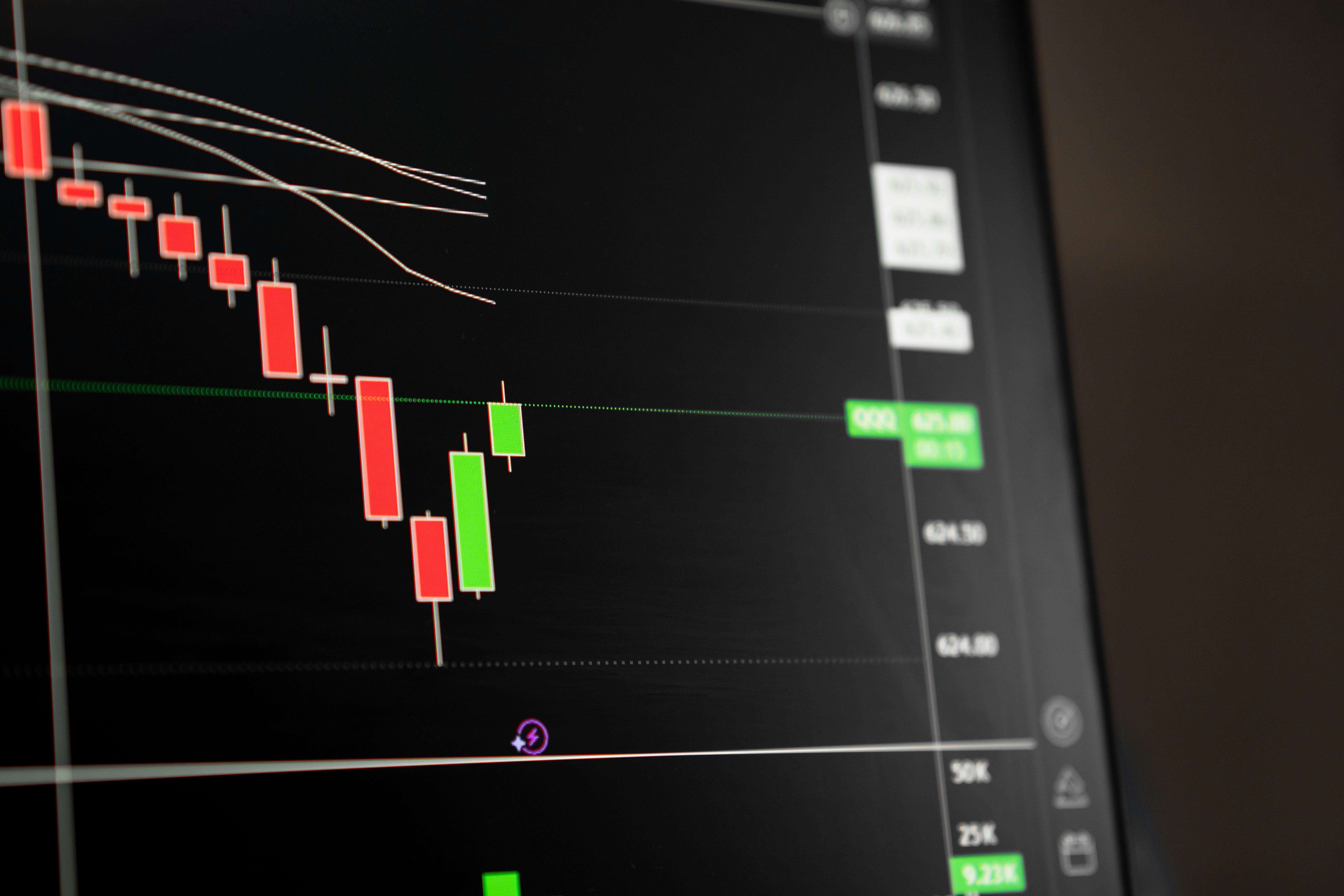
In 2026, the stock market is more complex and competitive than ever. Discover how cutting-edge AI-powered algorithmic trading platforms are revolutionizing investment strategies, offering unparalleled speed, precision, and profit potential. This in-depth guide explores the top automated investing solutions, compares their features, and reveals how you can leverage machine learning and predictive analytics to maximize your returns and secure your financial future. Stop guessing, start profiting – your ultimate guide to automated wealth generation awaits!
Introduction to the Topic
The year is 2026, and the financial landscape has undergone a seismic shift. Gone are the days when market dominance was solely the domain of human intuition and lightning-fast manual trades. Today, the titans of Wall Street, alongside savvy retail investors, are increasingly turning to a formidable ally: Artificial Intelligence (AI) powered algorithmic trading platforms. These sophisticated systems are not just tools; they are intelligent partners, capable of analyzing vast datasets, identifying intricate patterns, and executing trades at speeds incomprehensible to the human mind, all with a cold, calculated precision devoid of emotion. For anyone looking to gain a significant edge in the volatile yet opportunity-rich stock market of 2026, understanding and adopting these AI-driven solutions is no longer an option – it's a necessity.
As the global economy navigates new challenges and embraces unprecedented technological advancements, the promise of automated, intelligent investing has never been more compelling. This article from profitwavestock.com delves deep into the world of AI algo trading, exploring how these platforms work, the immense benefits they offer, and critically, which leading options stand out in 2026 to help you not just participate, but truly crush the market and guarantee your next fortune.
Backgrounds & Facts
Algorithmic trading, or 'algo trading,' has been a staple of institutional finance for decades, primarily focused on high-frequency trading (HFT) and large order execution. However, the integration of advanced Artificial Intelligence and Machine Learning (ML) has propelled these systems into an entirely new dimension. Traditional algorithms follow pre-defined rules; AI algorithms, conversely, learn, adapt, and evolve. They can process and interpret unstructured data – news articles, social media sentiment, central bank statements – alongside traditional financial metrics to predict market movements with astonishing accuracy.
By 2026, the global AI in FinTech market has surged past previous projections, with AI-powered trading solutions leading the charge. Market analysts estimate the segment involving AI-driven automated investing platforms to be valued in the hundreds of billions, projected to grow at a CAGR exceeding 25% through the decade. This growth is fueled by several key advancements:
- Machine Learning (ML): Algorithms are trained on historical data to identify correlations, predict price movements, and optimize trading strategies. Reinforcement learning, in particular, allows systems to learn from their own successes and failures in real-time.
- Deep Learning (DL): Utilizes neural networks to uncover complex, non-linear relationships in data, essential for predicting nuanced market shifts.
- Natural Language Processing (NLP): Enables AI to 'read' and understand financial news, earnings reports, social media chatter, and geopolitical developments, extracting sentiment and anticipating market reactions.
- Predictive Analytics: Going beyond historical data, AI can forecast future trends with greater confidence by identifying leading indicators and complex interdependencies.
- Big Data Processing: AI platforms can ingest and analyze petabytes of data – tick data, macroeconomic indicators, alternative data sources – in milliseconds, far exceeding human capacity.
The benefits are manifold: unparalleled speed of execution, elimination of emotional biases, rigorous backtesting capabilities to validate strategies, diversification across multiple assets, and the ability to operate 24/7. However, it's crucial to acknowledge the risks: the complexity of these systems can lead to 'black swan' events if not properly managed, overfitting of models to historical data, and the significant upfront investment or subscription costs associated with top-tier platforms. Nevertheless, for those who master these tools, the potential for profit maximization is immense.
Expert Opinion / Analysis
Dr. Evelyn Reed, a leading quant strategist at 'Aurora Capital Analytics,' states, "In 2026, AI algorithmic trading isn't just about speed; it's about superior intelligence. These platforms are democratizing sophisticated quantitative strategies that were once exclusive to hedge funds. Retail investors, with the right platform, can now leverage predictive models and real-time data analysis to compete effectively with institutional players." Her analysis underscores a critical trend: the democratization of advanced financial technology.
The competitive landscape of the stock market has never been fiercer. The sheer volume of data, the speed of information dissemination, and the global interconnectedness of markets mean that human reaction times are simply too slow. "AI removes the human bottleneck," explains financial technology futurist, Marcus Thorne. "It allows for instantaneous decision-making based on objective data, not fear or greed. This emotional detachment is perhaps the single greatest advantage an AI algo offers, leading to more consistent and disciplined trading outcomes."
Furthermore, AI platforms are evolving beyond mere execution. They are becoming strategic partners, offering portfolio optimization, risk management, and even personalized financial advice by analyzing individual investor goals and risk tolerances. The ability to backtest strategies against decades of market data, simulate various scenarios, and automatically adjust parameters based on live market feedback provides an unprecedented level of confidence and control. As regulatory bodies begin to catch up with the rapid pace of innovation, we can expect a more standardized and secure environment, further solidifying AI's role as the cornerstone of modern investing.
💰 Best Options in Comparison (VERY IMPORTANT)
Choosing the right AI algo trading platform in 2026 is a pivotal decision that can significantly impact your financial success. These platforms vary widely in complexity, features, and pricing, catering to different investor profiles. Here are three leading options that have garnered significant attention and deliver exceptional value:
-
QuantFlow AI Pro
Target User: Experienced traders, quantitative analysts, and serious investors seeking high customization and institutional-grade features. Key Features: Advanced machine learning models for predictive analytics, fully customizable strategy builder with Python integration, real-time market sentiment analysis via NLP, robust backtesting engine, multi-asset class support (stocks, options, futures, crypto). Offers high-frequency trading capabilities and sophisticated risk management tools. Pricing Model: Tiered subscription (Premium: $999/month, Enterprise: custom pricing) with a performance fee of 5-10% on generated profits above a certain threshold. High entry barrier but designed for significant returns.
-
AlgoGenius Retail
Target User: Beginner to intermediate investors looking for user-friendly automation without extensive coding knowledge. Key Features: Intuitive drag-and-drop strategy builder, library of pre-built and optimized trading strategies (e.g., trend following, mean reversion, arbitrage), intelligent portfolio rebalancing, automated risk management features, educational resources, and a vibrant community forum. Focuses on ease of use and accessibility. Pricing Model: Affordable monthly subscription ($99/month for Basic, $249/month for Advanced) with no performance fees. Ideal for those looking to dip their toes into AI algo trading.
-
SynapseTrade AI
Target User: Niche investors focused on specific markets like sustainable investing (ESG), emerging markets, or advanced crypto strategies. Key Features: Specialized AI models trained on alternative data sources (e.g., satellite imagery for supply chain, social impact metrics for ESG), advanced NLP for sector-specific news analysis, cross-platform integration with major brokers and DeFi protocols, intelligent hedging strategies, and a focus on ethical AI and transparency. Offers unique alpha generation opportunities in less-saturated markets. Pricing Model: Hybrid model – base subscription ($499/month) plus a variable performance fee (3-7%) depending on the chosen specialized module.
Comparison Table: Leading AI Algo Trading Platforms (2026)
| Feature | QuantFlow AI Pro | AlgoGenius Retail | SynapseTrade AI |
|---|---|---|---|
| Target User | Experienced/Quant Investors | Beginner/Intermediate Investors | Niche/Specialized Investors |
| Key Differentiator | Deep Customization, HFT, Institutional-grade ML | User-Friendly, Pre-Built Strategies, Community | Specialized Niche Focus (ESG, Crypto), Alternative Data |
| Complexity Level | High | Low to Medium | Medium to High |
| Custom Strategy Building | Extensive (Python API) | Drag-and-Drop, Template-based | Moderate (Module-based) |
| Pricing Model | High Subscription + Performance Fee | Affordable Monthly Subscription | Hybrid (Subscription + Variable Performance Fee) |
| Risk Management | Advanced, Customizable | Automated, Pre-set Limits | Specialized Hedging Tools |
| Customer Support | Dedicated Account Manager | Email, Forum, Knowledge Base | Priority Email, Specialized Webinars |
| Recommended For | Maximizing high-volume, complex strategies | Automating basic to advanced strategies with ease | Targeting unique alpha in specific market segments |
Outlook & Trends
The trajectory of AI algo trading in 2026 and beyond points towards even greater sophistication and integration. We anticipate several key trends:
- Explainable AI (XAI): The "black box" problem of AI is being addressed. Future platforms will offer greater transparency, allowing users to understand *why* an AI made a particular trading decision, building trust and enabling better oversight.
- Quantum Computing Integration: While still in nascent stages, the eventual integration of quantum computing could unlock unprecedented processing power, enabling AI to analyze even more complex datasets and run simulations at speeds previously unimaginable, potentially revolutionizing risk modeling and portfolio optimization.
- Hyper-Personalization: AI will move beyond generic strategies to create truly bespoke investment profiles. Platforms will learn individual risk tolerance, ethical preferences (e.g., ESG scores), income goals, and even tax situations to craft dynamic, self-optimizing portfolios.
- Enhanced Regulatory Frameworks: As AI becomes more pervasive, governments and financial regulators will introduce more comprehensive guidelines to ensure market stability, fairness, and investor protection. This will likely involve standardized testing for AI models and accountability frameworks.
- AI in Decentralized Finance (DeFi): The intersection of AI and blockchain technology will lead to autonomous, intelligent agents performing complex trading and yield farming strategies within decentralized ecosystems, offering new avenues for profit and efficiency.
- Predictive Market Maintenance: AI could evolve to not just predict individual stock movements but also anticipate broader market dislocations or even prevent flash crashes by identifying systemic risks in real-time and suggesting preventative measures.
These advancements promise to make AI algo trading even more powerful, accessible, and integral to the future of wealth generation.
Conclusion
In the dynamic and hyper-competitive stock market of 2026, AI-powered algorithmic trading platforms are no longer a luxury; they are a fundamental pillar of successful investing. From high-frequency traders to retail investors seeking automated wealth generation, these intelligent systems offer an unparalleled advantage in speed, precision, and emotional detachment. By leveraging machine learning, predictive analytics, and vast data processing capabilities, AI platforms empower investors to identify opportunities, manage risks, and execute strategies with a level of sophistication previously unimaginable.
Whether you're a seasoned quant seeking deep customization with QuantFlow AI Pro, a beginner looking for user-friendly automation with AlgoGenius Retail, or a niche investor exploring specialized markets with SynapseTrade AI, there's an optimal solution waiting for you. The future of investing is automated, intelligent, and incredibly profitable. Don't be left behind. Embrace the AI revolution, choose the platform that aligns with your financial goals, and prepare to crush the market in 2026 and beyond. Your next fortune is not just possible; it's within reach with the power of AI algo trading.