
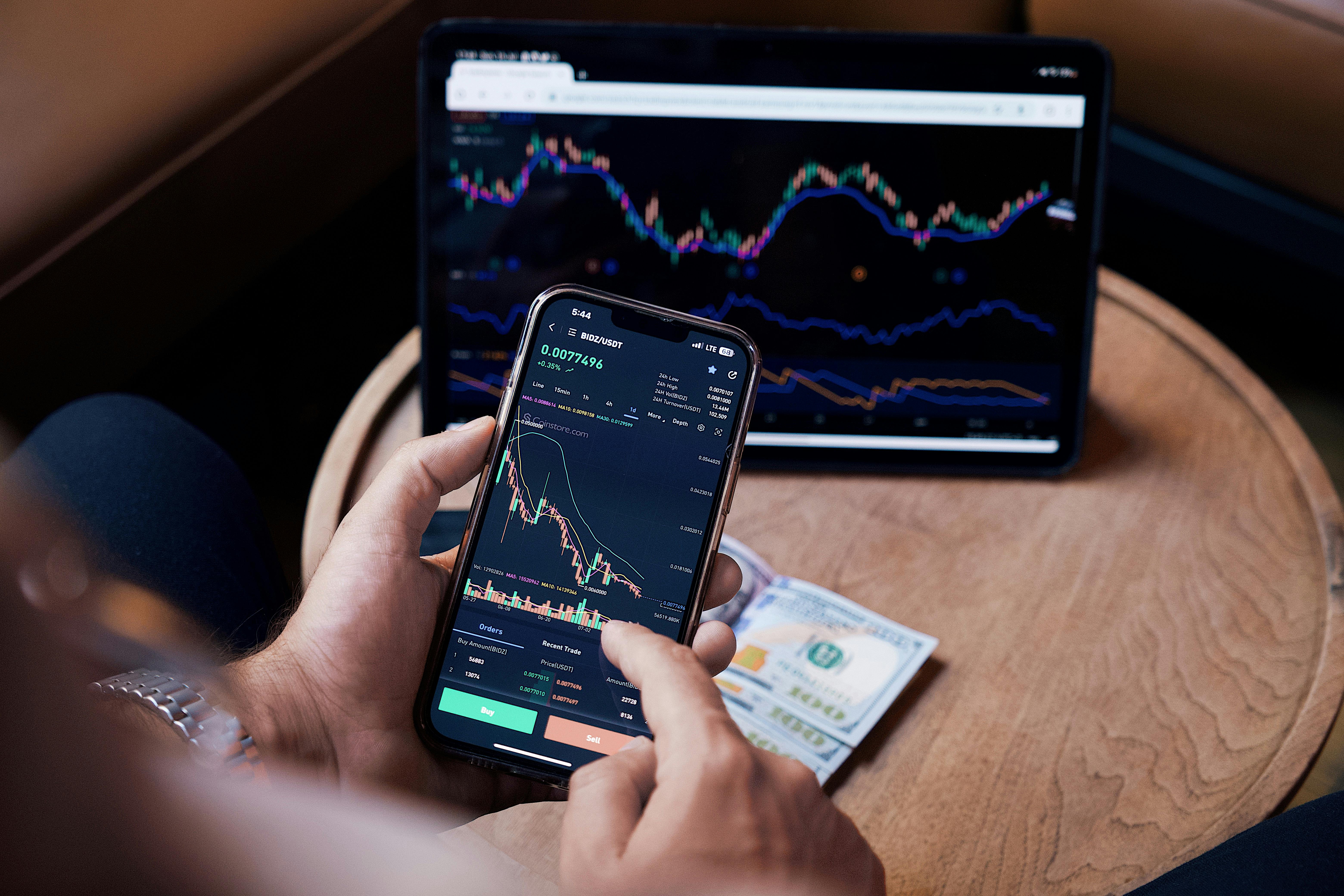
Discover how AI-powered algorithmic trading platforms are revolutionizing stock market investments in 2026. Explore the best automated trading software, quant strategies, and investment technology to maximize your returns, minimize risk, and secure a competitive edge in today's dynamic financial landscape. This guide compares leading solutions for every investor, from novice to seasoned pro.
Introduction to the Topic
Welcome to 2026, a year where the financial markets are not just influenced but increasingly driven by the unseen hand of artificial intelligence. The promise of automated trading, once a niche for institutional giants, has fully blossomed, bringing sophisticated algorithmic investing tools within reach of every serious investor. Gone are the days when market analysis was solely a human endeavor; today, machine learning algorithms sift through petabytes of data, identify intricate patterns, predict market movements with astonishing accuracy, and execute trades at speeds unimaginable to human traders. For those looking to optimize their portfolio, enhance returns, and mitigate emotional trading biases, understanding and leveraging AI trading platforms is no longer an option – it's a necessity.
This comprehensive article from profitwavestock.com will delve deep into the world of AI-powered algorithmic trading. We'll explore how these advanced systems work, their undeniable advantages, and the critical factors to consider when choosing the right platform for your investment goals. Whether you're a seasoned trader seeking to refine your quant strategies or a new investor eager to tap into the power of automated stock prediction, this guide is your definitive roadmap to navigating the future of profitable investing.
Backgrounds & Facts
Algorithmic trading has been a fixture in financial markets for decades, initially focused on high-frequency trading (HFT) and simple execution strategies. However, the advent of advanced artificial intelligence and machine learning (ML) in the late 2010s and early 2020s has fundamentally transformed its capabilities. By 2026, AI is no longer just assisting; it's leading. Modern AI trading platforms utilize deep learning, natural language processing (NLP), and reinforcement learning to analyze a vast array of data sources – from historical price movements and trading volumes to global news sentiment, social media trends, macroeconomic indicators, and even satellite imagery – to generate highly nuanced and adaptive trading signals.
The facts speak for themselves: industry reports indicate that AI now accounts for over 70% of daily trading volume in major equity markets, with projections seeing this figure rise to 85% by the end of the decade. This surge is fueled by AI's unparalleled ability to process information faster, identify complex correlations that elude human perception, and execute trades with zero emotional bias. Furthermore, the sophistication of backtesting capabilities in these platforms allows for rigorous validation of strategies against decades of market data, providing investors with a data-driven confidence never before possible. While the benefits are immense – including superior execution, diversified strategy implementation, and continuous market monitoring – it's crucial to acknowledge the inherent risks, such as model overfitting, 'black swan' event vulnerabilities, and the need for robust cybersecurity. Yet, for those who understand its mechanics, AI represents the pinnacle of modern investment technology.
Expert Opinion / Analysis
“The transition to AI-first investing isn't just an evolution; it's a revolution,” states Dr. Anya Sharma, a leading quant analyst and CEO of FinTech Innovations Group. “By 2026, the competitive edge no longer belongs to the investor with the sharpest intuition, but to the one with the most sophisticated AI trading software. We're seeing algorithms move beyond mere execution to genuine strategy generation, adapting in real-time to unprecedented market conditions.”
Our analysis at profitwavestock.com confirms this perspective. The democratization of these powerful tools means retail investors no longer need a Bloomberg terminal or a team of PhD quants to access advanced strategies. AI-driven robo-advisors and specialized algorithmic trading platforms are making institutional-grade investment technology accessible and affordable. This shift empowers individual investors to engage in complex portfolio optimization, dynamic risk management AI, and even explore niche markets with the confidence of data-backed decisions. However, experts like Mark Chen, a veteran Wall Street trader turned AI consultant, caution, “While AI removes emotion, it doesn't remove the need for human oversight. Understanding the underlying logic of your chosen AI, regularly reviewing its performance, and setting clear risk parameters are paramount. Blind trust in any algorithm can be as perilous as emotional trading.” The key takeaway is clear: AI is an indispensable partner, not a replacement for informed decision-making.
💰 Best Options in Comparison (VERY IMPORTANT)
Navigating the crowded market of AI-powered algorithmic trading platforms in 2026 can be daunting. To help you make an informed decision and find the best investment software for your needs, we've identified and compared three leading categories of solutions that cater to different investor profiles and goals. Each offers unique advantages in leveraging machine learning in finance for profitable trading strategies.
-
QuantFusion Pro: The Institutional-Grade Powerhouse
Target User: Experienced traders, active investors, and small hedge funds seeking advanced customization and deep analytical capabilities. QuantFusion Pro leverages cutting-edge deep learning models for predictive analytics, sentiment analysis, and complex pattern recognition across multiple asset classes.
Key Features: Fully customizable strategy builder, real-time market scanning, advanced backtesting and forward testing environments, API access for proprietary model integration, dynamic risk management AI, and multi-brokerage connectivity. It's designed for those who want to build and deploy their own sophisticated quant strategies with maximum control.
Why Choose It: Offers unparalleled flexibility and power for those with a strong understanding of trading and a desire to implement highly specific, data-driven approaches. The learning curve is steep, but the potential for tailored, high-performance algorithms is unmatched.
-
AlgoSmart Invest: Intelligent Automation for the Modern Investor
Target User: Intermediate investors and those new to algorithmic trading who seek robust, pre-built AI strategies and a user-friendly interface. AlgoSmart Invest focuses on simplifying access to automated trading while still offering significant customization options.
Key Features: Curated library of proven AI-driven strategies (e.g., trend following, mean reversion, arbitrage), intuitive drag-and-drop strategy builder, simplified backtesting reports, automated portfolio rebalancing, and integrated educational resources. It prioritizes ease of use without sacrificing performance.
Why Choose It: An excellent choice for investors looking to benefit from AI without needing extensive coding knowledge. It provides a balance of automation, control, and accessibility, making sophisticated AI stock prediction tools available to a broader audience.
-
SynergyTrade AI: Hybrid Intelligence with Human Oversight
Target User: Investors who value the efficiency of AI but prefer to maintain significant human oversight and decision-making. SynergyTrade AI blends automated signal generation and execution with robust manual intervention capabilities.
Key Features: AI-generated trading signals with confidence scores, adjustable automation levels (from fully automated to semi-manual execution), real-time alerts for critical market events, comprehensive portfolio monitoring dashboards, and a collaborative interface for strategy refinement. It's ideal for those who want to leverage AI insights but retain the final say.
Why Choose It: Perfect for investors who want the best of both worlds – the speed and analytical power of AI combined with their own market intuition and risk tolerance. It offers a transparent view into the AI's reasoning, fostering trust and informed decisions.
To further assist your decision, here’s a clear comparison of these top AI trading platforms:
| Feature | QuantFusion Pro | AlgoSmart Invest | SynergyTrade AI |
|---|---|---|---|
| Target User | Experienced Quants/Hedge Funds | Intermediate/New Investors | Hybrid Control Investors |
| Key Features | Full Custom ML Models, API, Advanced Backtest | Pre-built Strategies, Drag-and-Drop Builder | AI Signals, Adjustable Automation, Alerts |
| Pricing Model | High-tier Subscription ($500+/month) | Mid-tier Subscription ($99-$299/month) | Mid-tier Subscription ($149-$349/month) |
| Brokerage Integration | Extensive (API for most major brokers) | Good (Selected popular brokers) | Broad (Most major brokers) |
| Risk Management | Highly Customizable AI-driven | Automated & Parameter-based | AI-assisted with Human Overrides |
| Learning Curve | Very High | Moderate | Moderate to High |
| Best For | Maximum Strategy Customization & Control | Accessible AI for Consistent Returns | Balanced Automation & Personal Control |
Outlook & Trends
The future of AI in trading is poised for even more dramatic advancements beyond 2026. We anticipate the widespread adoption of Explainable AI (XAI), which will provide greater transparency into how algorithms arrive at their decisions, addressing current 'black box' concerns and building greater trust among investors and regulators. Quantum AI, currently in its nascent stages, promises to unlock computational power that could revolutionize complex optimization problems and predictive modeling, leading to even more sophisticated trading algorithms and unprecedented investment returns.
Another significant trend is the deeper integration of AI with decentralized finance (DeFi). As DeFi platforms mature and regulatory clarity emerges, AI will play a pivotal role in managing liquidity pools, optimizing yield farming strategies, and identifying arbitrage opportunities across decentralized exchanges. The regulatory landscape will also continue to evolve, with governments and financial bodies working to establish frameworks that ensure fairness, stability, and ethical use of AI in finance. Investors should stay informed about these developments, as they will undoubtedly shape the next generation of financial AI tools and investment technology. The emphasis will shift towards hyper-personalized AI solutions that adapt not just to market conditions but also to individual investor risk profiles, ethical preferences, and long-term financial goals.
Conclusion
In 2026, AI-powered algorithmic trading platforms are no longer a futuristic concept but a present-day reality offering unparalleled opportunities for financial growth. From sophisticated quant strategies to user-friendly automated trading software, the market provides diverse options for every investor seeking to harness the power of machine learning in finance. By eliminating emotional biases, processing vast datasets, and executing trades with lightning speed, these platforms offer a significant edge in the pursuit of profitable returns.
However, success in this new era demands more than just signing up for a service. It requires diligent research, a clear understanding of your chosen platform's capabilities and limitations, and an ongoing commitment to monitoring and adjusting your strategies. The investment technology landscape is evolving rapidly, and staying informed about new features, ethical considerations, and market trends is paramount. Embrace the future of investing, explore the best algo trading platforms, and start your journey towards automated riches today. Your portfolio will thank you for it.