
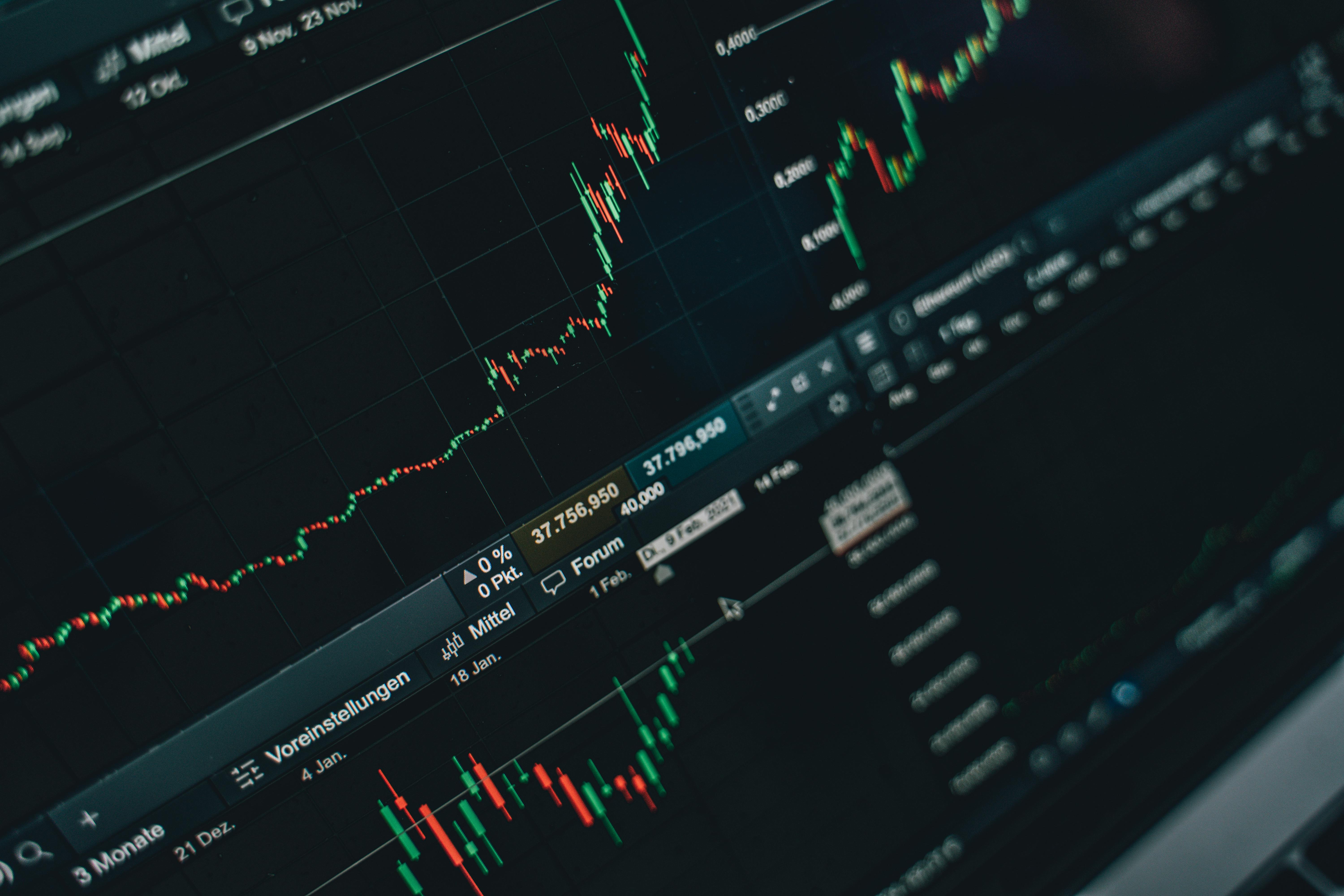
Severe market declines follow patterns that recur across very different triggering events.
Liquidity withdrawal
Market makers widening spreads and reducing size.
Which makes selling more expensive exactly when people want to.
Forced selling
Margin calls and fund redemptions requiring sales.
Which is price-insensitive and amplifies moves.
Correlation convergence
Assets falling together regardless of relationship.
Circuit breakers
Trading halted to interrupt disorder.
Which is a designed intervention rather than a failure.
Why the mechanics matter more than the trigger
The triggering event differs every time; the amplification mechanism is remarkably consistent.
Which is leverage requiring positions to be closed, funds needing to meet redemptions, and liquidity providers stepping back at exactly the wrong moment.
Understanding that explains why declines overshoot and why they can reverse quickly once forced selling exhausts itself.
Investor behaviour
Selling at lows and returning after recovery.
Which is well documented and expensive.
Historical recoveries
Broad markets recovering over periods measured in years.
Which is not a guarantee and is the historical pattern.
Preparation rather than prediction
Holding an allocation you can live with through a fall.
A general note
This describes market behaviour and is not investment advice.
What investors actually experience
Prices falling faster than news arrives, explanations appearing after the fact, and a strong urge to act.
Which is precisely the point at which acting has historically been most costly.
The behavioural evidence on this is unusually consistent: investors who sell during sharp declines underperform those who do nothing, by a substantial margin over long periods.
Volatility measures
Indices reflecting expected market movement.
Which spike during declines.
Recovery patterns
Sharpest gains frequently occurring close to the bottom.
Which is why being out of the market during recovery is so damaging.
Diversification during stress
Correlations converging when they were most needed.
A general note
This describes historical patterns and is not a prediction or advice.
Why market structure is worth understanding
Most investment writing is about what to buy. Very little of it is about how the machinery underneath actually works: how orders are matched, how funds track what they claim to track, how prices respond to information, and what regulation does and does not cover.
That machinery determines a large part of the outcome. It sets what trading costs, it explains price movements that otherwise look irrational, and it defines the boundary between a risk you accepted and a failure someone else is responsible for.
None of it tells you what to invest in. It tells you what is happening when you do, which is a different and more durable kind of knowledge than any particular recommendation.
The recurring lesson
Across almost every topic here, the same pattern appears: a mechanism that looks arbitrary from outside turns out to follow published rules, and the rules are available to anyone who wants to read them.
The gap between what is knowable and what most investors know is not caused by secrecy. It is caused by the material being dry, unpromoted and available only to people who go looking for it, while a great deal of louder content competes for the same attention with considerably less substance.
Where the reliable information is
Exchanges publish their rulebooks. Index providers publish their methodologies. Fund managers publish factsheets and annual reports. Regulators publish investor education material and firm registers. Companies publish annual reports and prospectuses. Central banks and statistical agencies publish their reasoning and their data.
All of it is free, all of it is authoritative, and almost none of it is promoted, because nobody makes money from you reading it.
A general note
This article describes how markets and financial products work and is not investment, tax or financial advice. Rules, protections, tax treatment and market structure differ substantially between countries and change over time. Where a decision is significant, advice from a qualified professional who knows your circumstances is the appropriate route.
A closing observation
Almost every mechanism described here rewards patience, low cost and understanding what you actually own, and punishes urgency, complexity and acting on incomplete information.
That is an unexciting conclusion, and it is the one that the accumulated evidence supports most consistently. The financial industry has a commercial interest in the opposite message, and the volume of content pushing it should be understood in that light.
Further reading
Regulator investor education material is written for the public, carries no product to sell, and covers this ground more thoroughly than commercial content does. It is the obvious place to start and almost nobody does.
One more thing worth stating plainly
The distinction between a risk you knowingly accepted and a failure someone else caused is the one that determines whether anyone owes you anything. It runs through every topic here: market losses are yours, firm failures may not be, and fraud is neither.
Most disappointment in personal investing comes from not having drawn that line before committing money, and from discovering afterwards which side of it a loss fell on.