
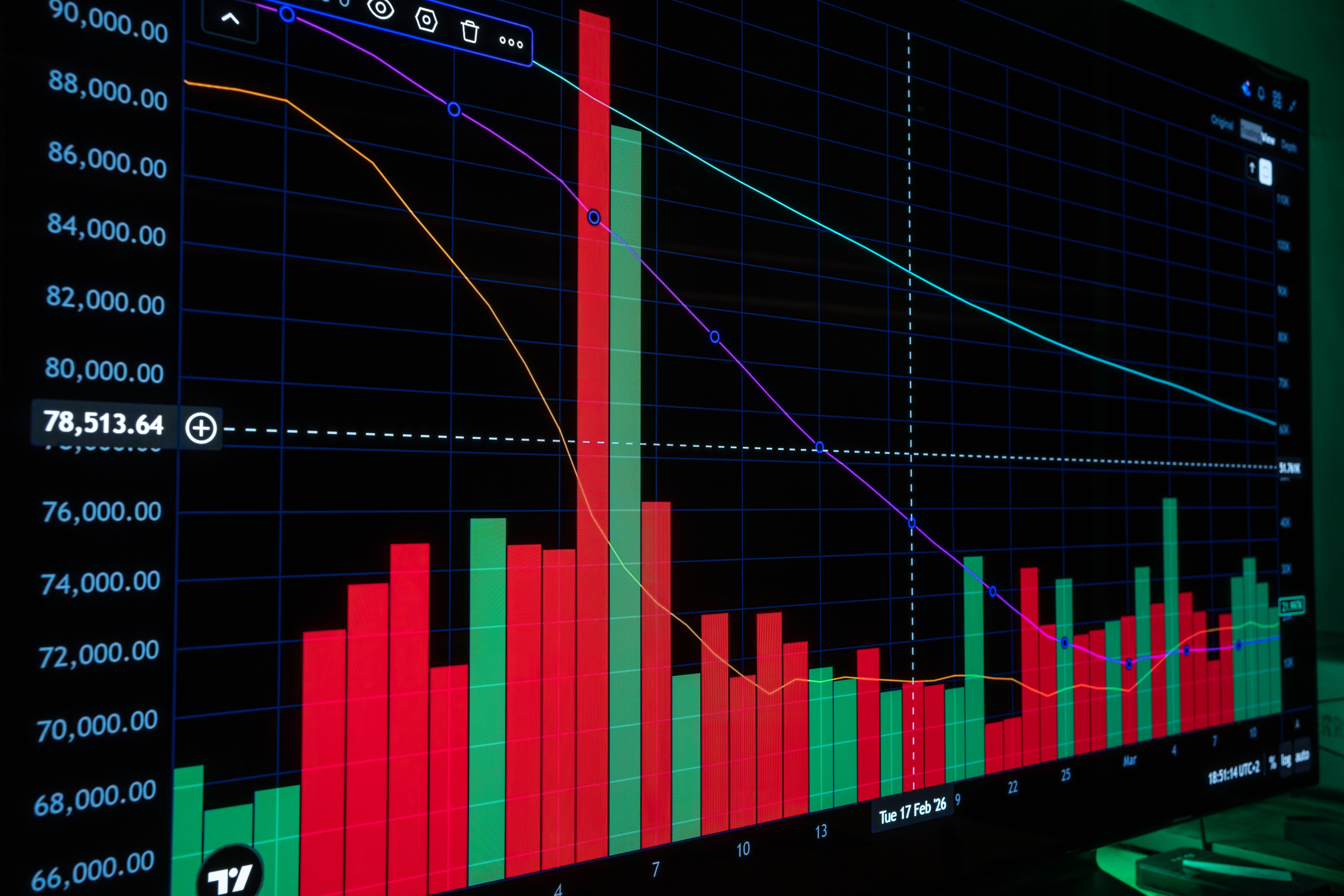
The division of a portfolio between broad asset classes explains most of the variation in how it behaves. Which specific holdings sit inside each class matters considerably less.
Asset classes behave differently from one another
Equities, bonds, cash and property respond to different forces. Interest rate changes hit bond prices directly, while corporate earnings drive equity valuations.
Within a class the spread is narrower. Two broad equity funds fall together in a market decline, whatever their individual selections.
Because between-class differences dominate within-class differences, the mix does more work than the picks.
Correlation is what the allocation is buying
Combining assets that do not move together produces a portfolio whose swings are smaller than the weighted average of its parts.
That reduction is the mathematical reason to hold more than one class. It does not depend on either holding being well chosen.
Correlations are unstable, however, and assets that normally diverge can fall together in a severe dislocation, which is when the protection is most wanted.
Security selection moves less than the mix
Choosing between funds within a class alters returns at the margin. Choosing between a portfolio of mostly bonds and one of mostly equities alters the entire risk profile.
An investor who selects excellent individual holdings but places them in a mix unsuited to the horizon has made the larger error.
This is the reasoning behind setting the allocation before considering any specific instrument, rather than assembling a portfolio from whatever looks appealing.
The allocation encodes a time horizon
Assets with higher expected returns fluctuate more, and tolerating that fluctuation requires not needing the money soon.
A horizon of decades can absorb a deep drawdown because there is time for a recovery. A horizon of two years cannot.
Allocation is therefore the point where the purpose of the money enters the portfolio, and it is the input most likely to be set without much thought.
Risk capacity and risk tolerance are separate inputs
Capacity is structural: how much loss the plan can absorb before its goal becomes unreachable. It follows from the horizon and the size of the balance.
Tolerance is behavioural: how much decline the holder will sit through without selling. A portfolio abandoned at the bottom fails regardless of its design.
A sound allocation respects whichever of the two is more constraining, because exceeding either one produces the same outcome by a different route.